The importance of reclaiming the whakapapa of midwifery
30 June, 2026
Dr Jacqueline Martin came to Ara with a purpose: to transform how the next generation of midwives is prepared to care for whānau Māori.
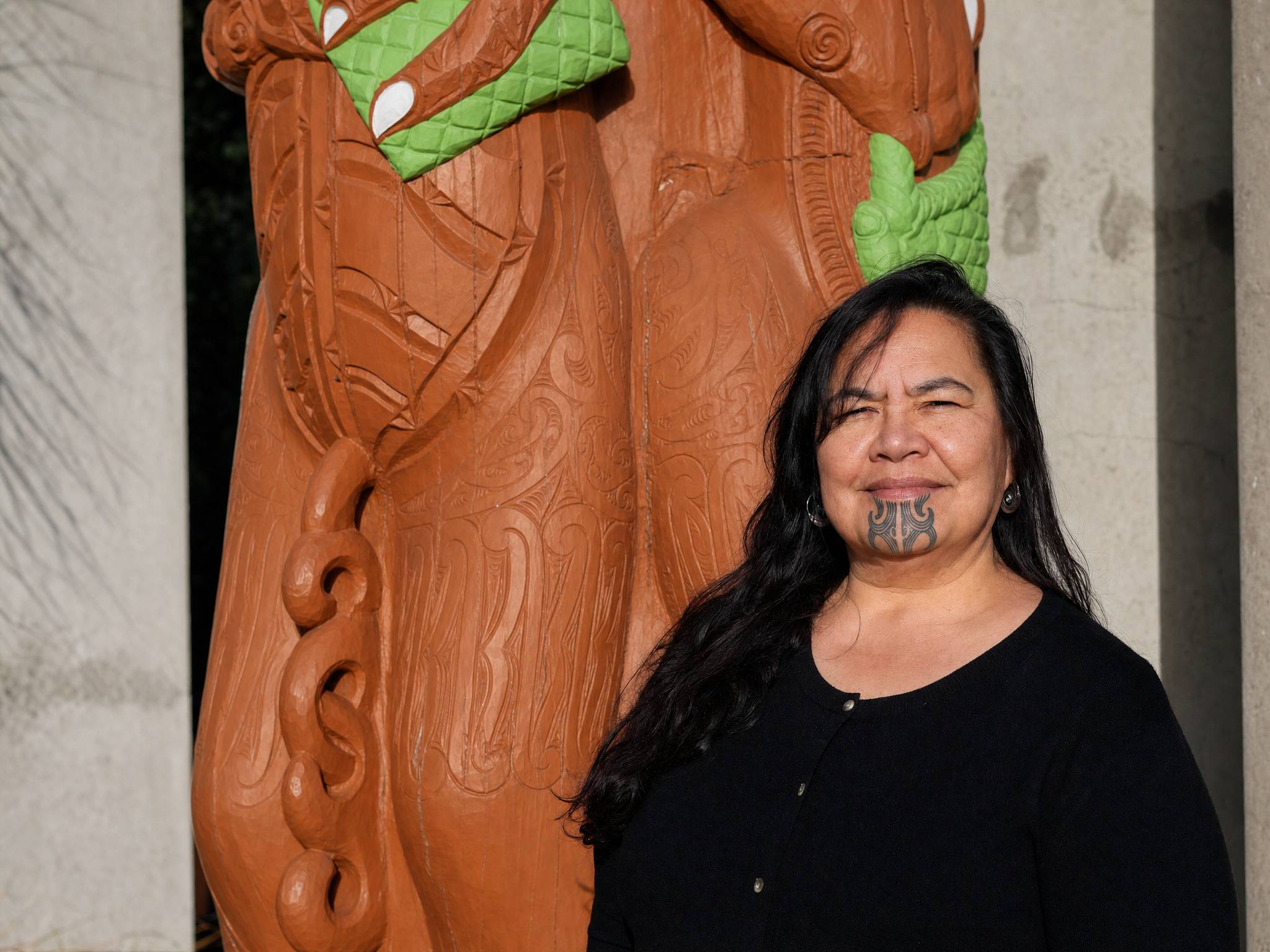
When Dr Jacqueline Martin finished the first draft of the final chapter of her PhD, a colleague asked her a question that changed the course of her career. Her research was true and important, they said, but what was she going to do about it?
Her answer was to return to the whakapapa (origin) of midwifery itself, to a place where midwives are made. In early 2022, she booked a one-way ticket from Hamilton to Ōtautahi Christchurch for a job she had not yet been offered. Guided by her tūpuna (ancestors), she knew this was where her mahi (work) needed to happen. Within weeks, she had joined Ara as a kaiako (tutor) in midwifery.
Dr Martin (Raukawa, Waikato, Tauranga Moana) brings more than 20 years of clinical practice to the classroom, including years working as a locum midwife covering the remote East Coast communities of Te Tairāwhiti (Gisborne region). That experience on the frontline showed her the persistent inequities facing Māori in maternity care, and convinced her that lasting change had to start with education.
"I wanted to give back to midwifery. If we want change, it starts with how we prepare and support our graduates."
Her master's study through Te Wānanga o Aotearoa began with a deceptively simple question: what is a Māori midwife? The answer, that all Māori midwives are educated and trained as Pākehā midwives, who happen to be Māori. This awareness propelled her straight into her doctoral research. Her thesis, Our First Mothers, completed through Te Whare Wānanga o Awanuiārangi, explores Māori midwifery praxis and re-centres Indigenous knowledge within midwifery in Aotearoa. It presents Tāpuhitanga (Māori midwifery) as a counternarrative to Pākehā midwifery, drawing on pūrākau (legends) as both method and evidence. In 2024, she became the first kaiako Māori at Ara to achieve a PhD.
At Ara, Dr Martin has been central to reshaping how midwifery is taught. As part of the Unified Midwifery Working Group with colleagues from Otago Polytechnic and Wintec, together with Māori midwifery kaiako, she successfully advocated for mātauranga Māori (Māori knowledge) to be woven through every year of the degree rather than compressed into a single paper. Ākonga (students) now build from Te Tiriti o Waitangi and an experiential introduction to te ao Māori (the Māori worldview) in their first year, through hauora Māori (Māori health) and anti-racism in their second year, to cultural safety and cultural care planning in their third year before demonstrating culturally and clinically safe practice in their fourth and final year.
Her greatest hope is that midwifery ākonga graduate as a whānau (family), tangata whenua (Māori) and tangata Tiriti (people of the Treaty) together, strong in who they are and able to build genuine relationships with the women and whānau in their care.
Dr Martin is now a Trustee for Ngā Māia (Māori midwives national collective), sits on the editorial board of the New Zealand College of Midwives and is working to make her research accessible to Māori midwifery ākonga. Her measure of success is simple.
"When our midwifery profession reflects the communities we serve, then my work is done."
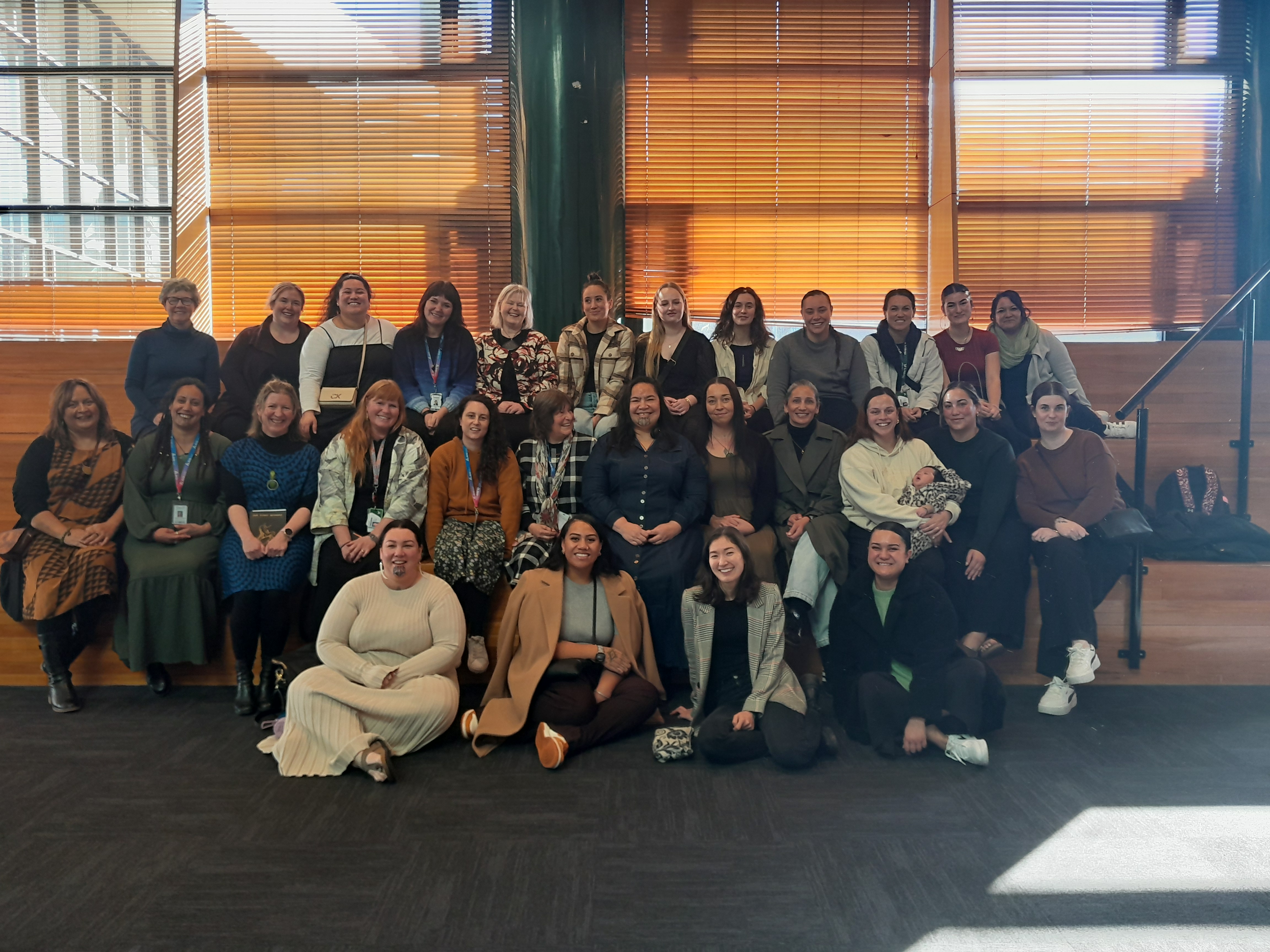
Dr Jacqueline Martin (middle row, centre, wearing navy blue) with colleagues and ākonga in 2024, celebrating the completion of her PhD.